Australian investors have driven NZ$37 million in recent sales at Queenstown's Lakeview Te Taumata development within a sharply compressed timeframe of just four weeks. Following significant structural changes implemented in the Australian Federal Budget, buyers relocating capital from Brisbane, the Gold Coast, and Victoria now account for approximately 80 per cent of recent transactions. This particular demographic is increasingly drawn by New Zealand's structural tax settings and the enduring appeal of a premium alpine lifestyle. The swift allocation of capital toward this specific Queenstown precinct highlights a broader recalibration among sophisticated trans-Tasman purchasers. These individuals are rigorously evaluating international markets for political stability, favourable fiscal policies, and undeniable architectural substance. For high-net-worth Australians, the geographical proximity of Queenstown serves as a natural extension of their domestic footprint, while providing an essential hedge against domestic economic shifts. This creates a compelling narrative for cross-border investment that is largely impervious to short-term market fluctuations.
- Australian investors accounted for NZ$37 million in sales at Lakeview Te Taumata over a four-week period, driven by favorable tax conditions in New Zealand.
- The absence of a broad-based capital gains tax in New Zealand is a primary factor attracting high-net-worth individuals from Brisbane, the Gold Coast, and Victoria.
- Lakeview Te Taumata is a NZ$2 billion-plus masterplanned precinct designed to function as an integrated extension of Queenstown, featuring luxury residences, hotels, and wellness facilities.
- Queenstown's alpine topography creates natural barriers to entry, ensuring long-term scarcity and resilience for premium real estate compared to expansive coastal markets.
01How is the Australian Federal Budget influencing trans-Tasman property investment?
The recent fiscal announcements in Australia have initiated a measurable shift in capital allocation among high-net-worth individuals. Investors are increasingly reassessing their domestic property portfolios and looking across the Tasman for premium residential opportunities that offer both security and growth potential. This reallocation is evident in the enquiry levels for New Zealand assets, which have increased by 50 per cent since the Federal Budget was handed down. The primary driver for this movement is the search for favourable tax settings. New Zealand offers an absence of a broad-based capital gains tax, presenting a compelling proposition for those seeking to diversify their holdings while optimising their financial positions over the long term. This structural advantage means that wealth preservation strategies can be executed with greater efficiency, allowing purchasers to focus entirely on the intrinsic qualities of the property rather than complex taxation mitigation.
The impact of this fiscal policy is quantifiable in the immediate sales volume at Queenstown's landmark Lakeview Te Taumata development. In the past month, five key residences worth a combined NZ$37 million have been secured by Australian purchasers. This rapid acquisition phase included four apartments transacting at approximately NZ$8 million each, alongside another significant residence at NZ$5 million. These specific figures indicate that buyers are not merely testing the market with entry-level acquisitions, but are committing substantial capital to secure prime positions within the development. Pushing total pre-sales towards the NZ$200 million mark, this milestone signals a profound depth of demand at the very top of the market. When pre-sales approach such a significant financial threshold before construction is heavily underway, it demonstrates that affluent buyers possess resolute confidence in the underlying asset class and the vision of the developers. The geographic origin of these buyers, primarily from Brisbane, the Gold Coast, and Victoria, underscores a concerted move by Australians to secure exceptional lifestyle assets. They display a clear preference for internationally recognised destinations that offer both geographical utility and structural financial efficiency.
02What does the timeline look like for this Queenstown precinct?
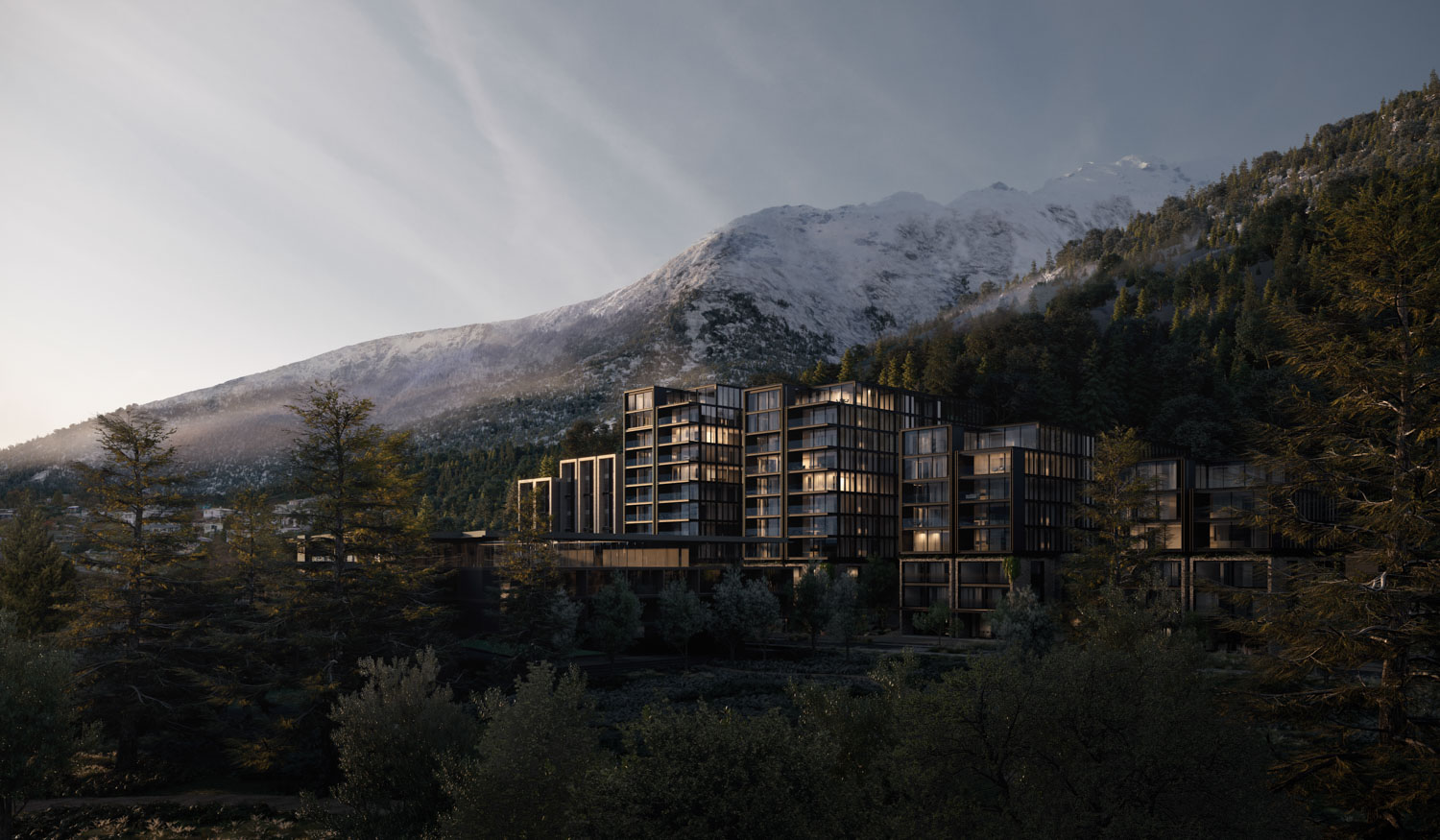
The influx of trans-Tasman capital has fundamentally accelerated the project's milestones, allowing developers to confidently proceed with the first stage of this NZ$2 billion-plus development. Melbourne-based developer 94 Feet is responsible for delivering this masterplanned precinct, which is meticulously designed to function as a highly integrated extension of the Queenstown town centre. The precinct will incorporate luxury residences alongside internationally branded hotels, dedicated restaurants, premium retail spaces, comprehensive wellness facilities, and carefully considered public spaces. The commencement of groundwork signals a definitive transition from concept to execution for this significant addition to the local landscape. By curating a cohesive environment built around wellness and alpine living, the developers are constructing an entire ecosystem rather than a solitary residential building. The scale of a NZ$2 billion investment guarantees a level of infrastructural permanence that fundamentally alters the economic gravity of the immediate area.
CMP Construction has been officially appointed to deliver Stage One of the project, with completion anticipated for the year 2028. This initial phase is substantial in both scale and architectural ambition, comprising Building A, which will house a 77-room Alpine Lodge, alongside Buildings B and C, which will deliver 94 luxury apartments. The structural commitment required to execute a precinct of this magnitude introduces an entirely different value proposition compared to purchasing a standalone house. Buyers are effectively acquiring a stake in a comprehensively managed environment.
Understanding the difference between buying into a development of this scale versus a single established residence is crucial for sophisticated investors. A solitary home, regardless of its individual architectural merit, relies entirely on the existing infrastructure, security, and ambient character of its immediate neighbourhood. In contrast, a NZ$2 billion masterplanned precinct dictates its own environmental quality. The inclusion of commercial, hospitality, and wellness infrastructure within the immediate footprint ensures a curated experience that cannot be replicated by a singular residential plot. The security, convenience, and absolute maintenance-free nature of a masterplanned apartment community appeals directly to international buyers who may only reside in the precinct for several months of the year. Furthermore, a precinct of this financial magnitude exerts a significant gravitational pull on the surrounding residential market. As the infrastructure is delivered and the retail and hospitality components activate, the immediate vicinity often experiences a recalibration in perceived value. Neighbouring properties stand to benefit from the direct proximity to international hotels and elevated dining options, thereby anchoring the broader location as a definitive hub for premium living and ensuring long-term capital preservation for early purchasers.
03What will the completed precinct contain?
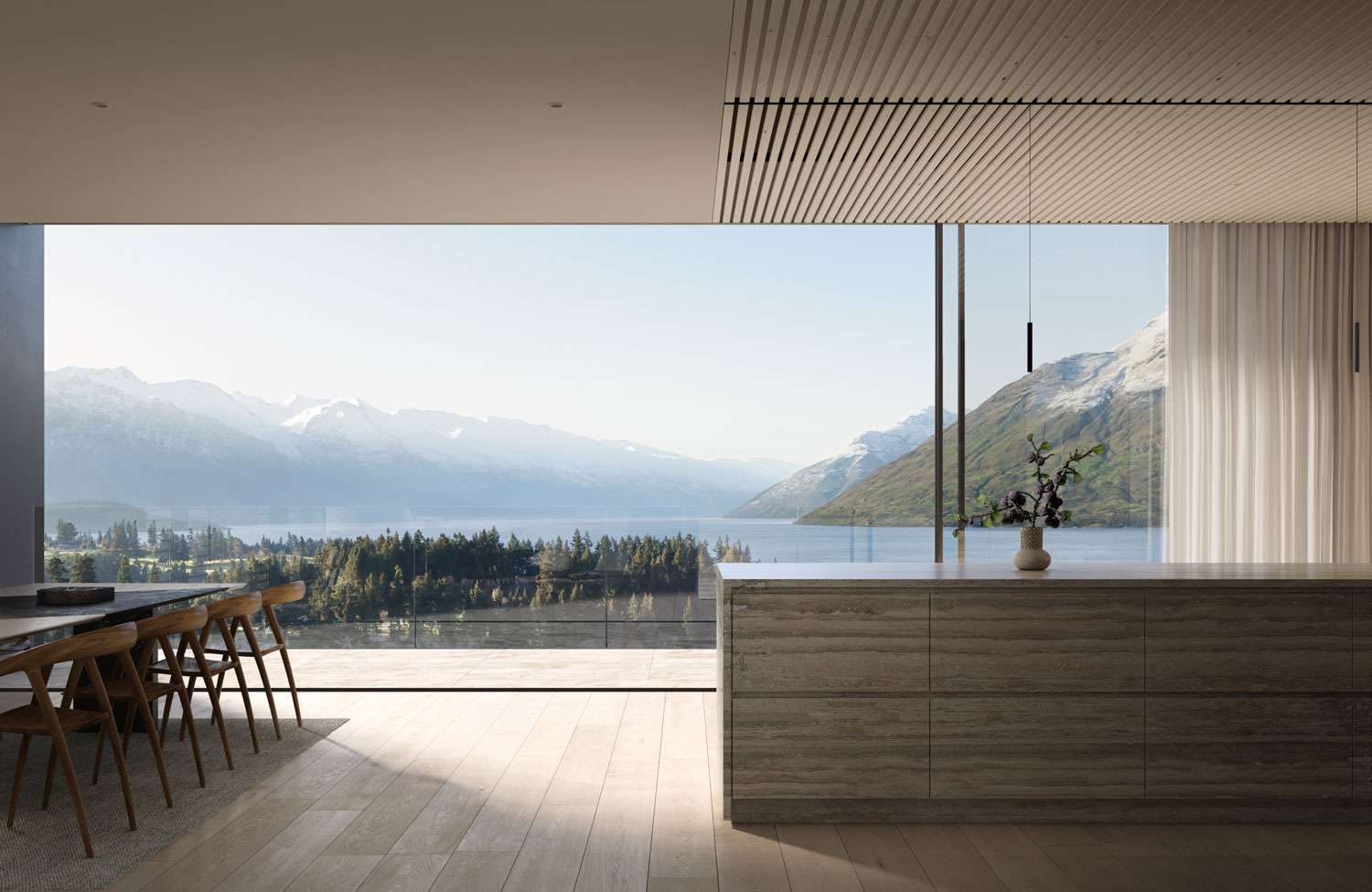
The architecture is by Architectus, with Monk Mackenzie as design partner, working for 94 Feet alongside Centuria and Britomart Hospitality Group. Their masterplan covers 30,000 square metres across Stages 1 and 2, due for completion in 2028, and is conceived as a mixed-use extension of the town centre: residences, co-living, co-working, hotels, retail, food and beverage, gallery space, carparks and coach parking, threaded through existing and new landscape.
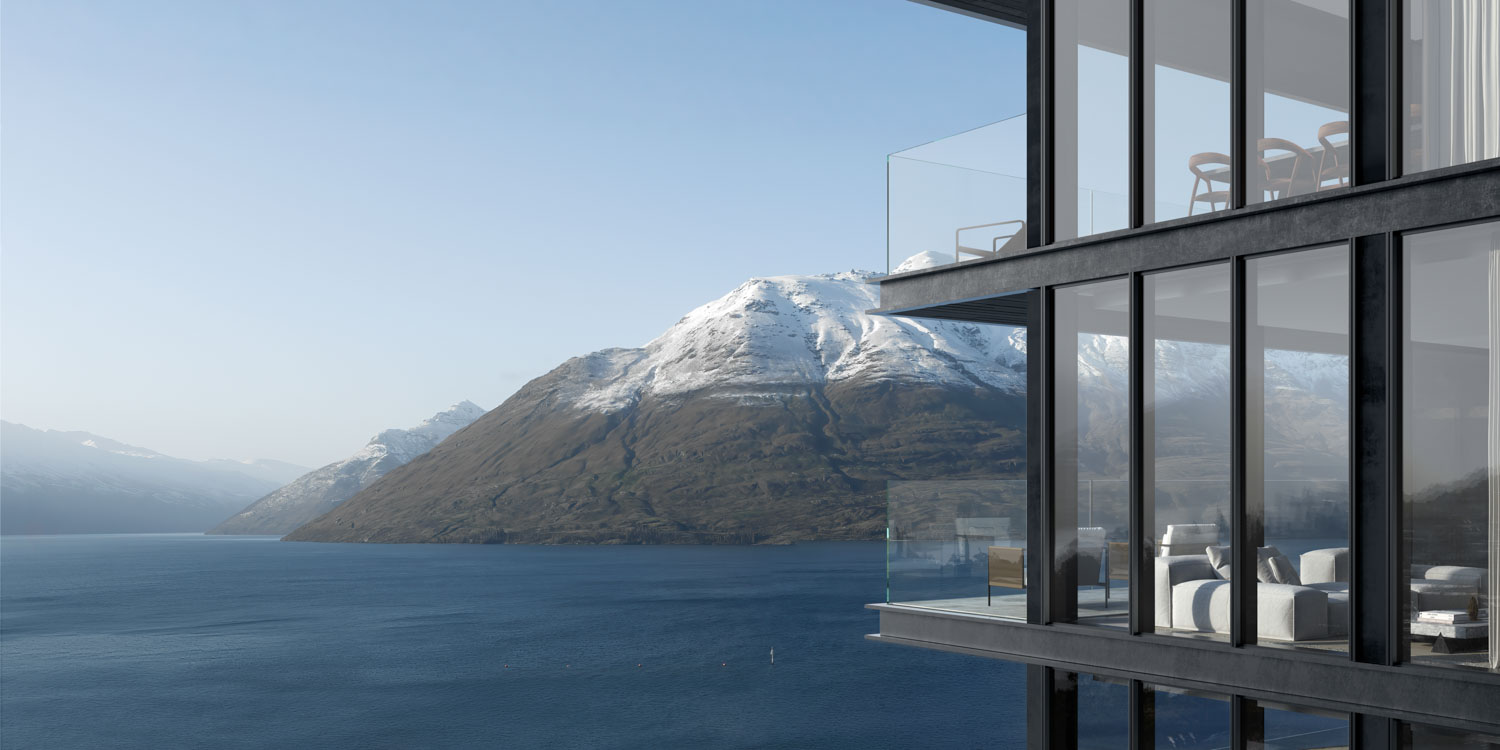
Stage 1 is the more legible piece of the equation. The first construction package, delivered by CMP Construction, covers Building A, a 77-room alpine lodge, with Buildings B and C adding 94 apartments. Across the whole of Stages 1 and 2 the scheme delivers 224 residences in four residential buildings, ranging from eight to twelve storeys. The design language is specific rather than generic: a solid podium clad in contextual schist stone carries glazed apartment volumes above it, and the apartment elements are separated and rotated on the podium so that views to and from Ben Lomond Reserve are held open. Carparking and servicing are sleeved into the lower podium, retail fronts Aisle Street, and sustainability principles run through the scheme.
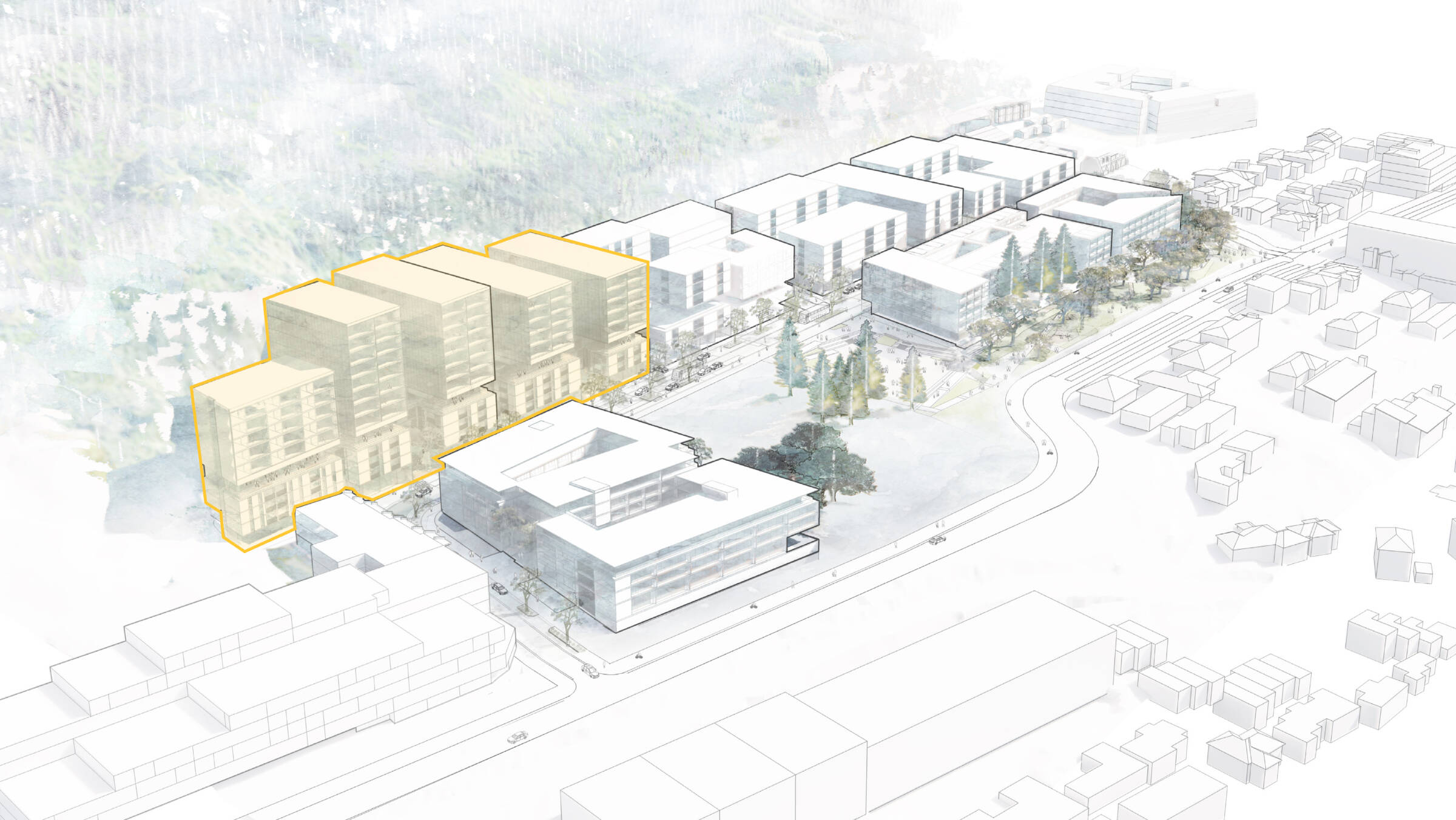
For a buyer, those details do the work that a price list cannot. A podium-and-tower arrangement that protects sightlines, and a retail edge that activates a street rather than turning its back on it, are the difference between a development that sits inside a town and one that merely overlooks it. You can see what of that calibre is currently available in the collection.
04Why does a tightly held alpine market behave differently from a coastal environment?
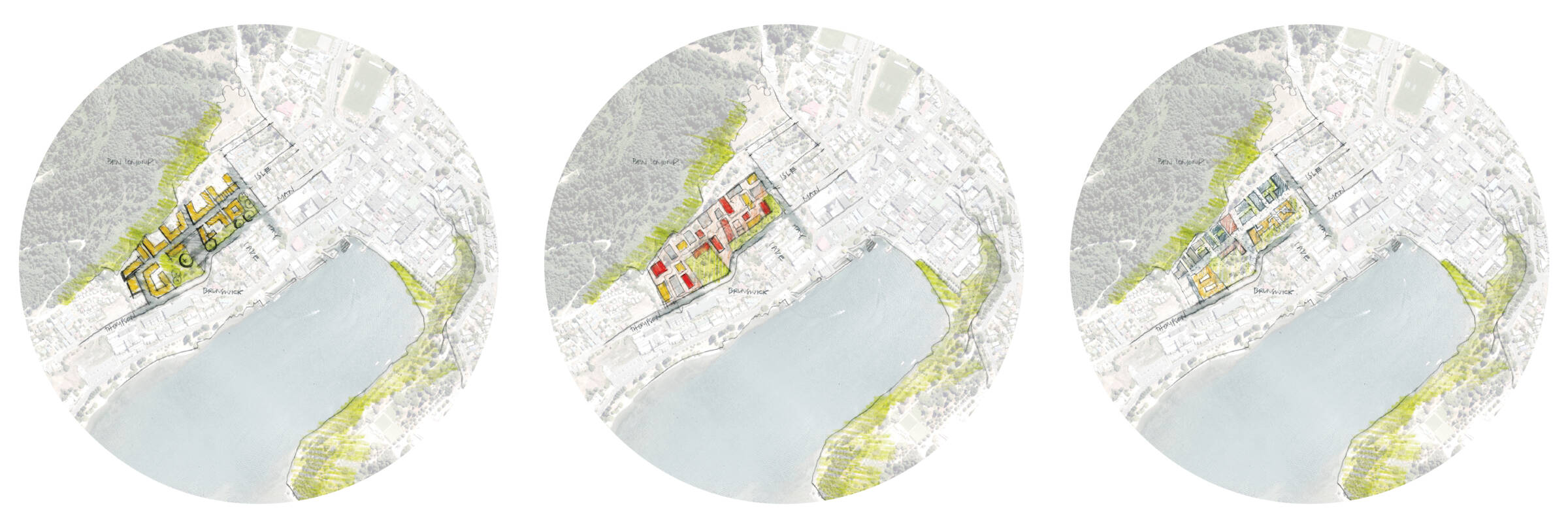
Urban Activation Director of Sales Matt George noted that buyer behaviour has shifted noticeably in recent weeks, as sophisticated investors actively look to diversify their holdings. According to George, while Queenstown has always appealed to Australian buyers, there is a new level of urgency in the current market. This urgency is partly explained by understanding why a tightly held alpine market behaves differently from a coastal environment. Coastal markets often present a linear expansion pattern along a shoreline, allowing for gradual urban sprawl and an ongoing supply of waterfront or near-waterfront land. An alpine market, by its very geological nature, is rigorously constrained by topography. Mountains, lakes, and protected natural reserves create absolute physical boundaries that prevent continuous outward development. This inherent geographical scarcity ensures that land available for comprehensive luxury development is exceptionally rare. Consequently, high-quality alpine assets historically demonstrate a resilience against market fluctuations, as supply cannot simply be manufactured to meet rising demand. When a comprehensive masterplanned precinct is approved and executed within these rigid topographical confines, it represents a singular opportunity that is unlikely to be repeated. The natural barriers to entry protect the investment, ensuring that the development remains highly exclusive.
The combination of a tightly held luxury market, New Zealand's highly favourable tax settings, and Queenstown's established global reputation is proving to be a highly effective catalyst for recent trans-Tasman transactions. For those navigating the specific complexities of trans-Tasman property acquisition, resources tailored to international buyers are increasingly essential for informed decision-making. The pricing structure at Lakeview Te Taumata reflects the varied requirements of this specific demographic, offering multiple entry points into this heavily constrained environment. Current offerings begin with elegantly proportioned two-bedroom apartments priced from NZ$2 million. Dual-key residences, comprising one bedroom plus an integrated studio, are available from NZ$2.55 million. For those requiring more extensive accommodation for families or guests, three-bedroom apartments commence from NZ$6 million, while expansive four-bedroom configurations start at NZ$9 million. At the absolute apex of the development, a sweeping six-bedroom penthouse is priced from NZ$25.5 million. This carefully tiered approach allows investors to select assets that precisely align with their spatial preferences and broader portfolio requirements.
The careful assembly of such a complex precinct requires immense foresight from developers and rigorous evaluation from purchasers. Buyers operating at this elevated level understand that true value is found in properties offering distinct architectural merit, seamless operational management, and enduring geographic appeal. To explore further properties of this exacting caliber, discerning individuals often review a curated collection of premium residences or seek discrete access to a private collection of strictly off-market opportunities. NZ Luxury Homes operates on the fundamental principle that exceptional real estate must be rigorously vetted before it is presented to the market. By ensuring only those properties that meet strict criteria for design, execution, and location are highlighted, nzluxuryhomes.nz ensures that buyers are consistently introduced to assets of genuine substance and long-term viability.
This article is for informational purposes and does not constitute investment or immigration advice. Independent professional guidance is recommended.