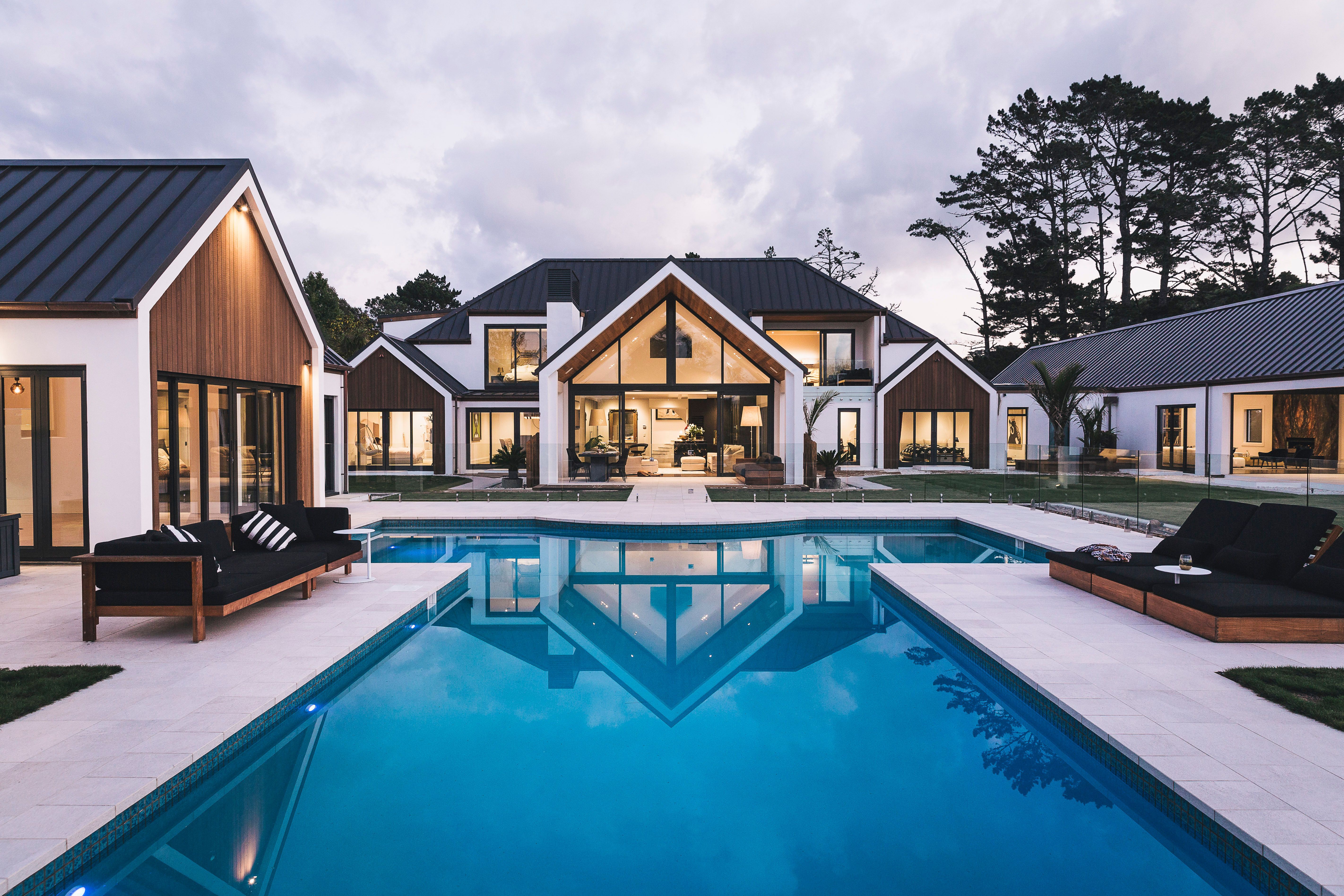
For the first time since 2018, the gates to New Zealand's most exclusive real estate have quietly swung open to international capital. The catalyst is a targeted amendment to the Overseas Investment Act, which came into effect in March 2026. This legislation carries a highly specific carve-out: holders of the Active Investor Plus (AIP) visa are now permitted to purchase or build a single residential property, provided the valuation sits strictly above the $5 million threshold.
- New OIA rules allow AIP visa holders to buy residential property above $5M.
- This is a targeted market reopening, not a broad policy change.
- Capital is flowing heavily toward Otago's premium offerings.
- The threshold of $5M separates the ultra-prime market from the broader sector.
- The reforms specifically aim to attract high-value international investment.
This is not a broad market reopening. It is a surgical injection of high-net-worth capital into the absolute apex of the property ladder. For serious buyers, institutional investors, and premium agents, the ripple effects are already undeniable.
 Bay of Islands — Northland waterfront drawing global prestige capital" />
Tourism New Zealand
01The Golden Visa Effect
The AIP visa was originally engineered to attract growth capital to New Zealand businesses. However, tying it to a luxury property exemption has dramatically shifted the calculus for the global elite. Immigration New Zealand reports a multi-billion-dollar pipeline of potential investment, driven largely by North American and Asian investors seeking a geopolitical safe haven.

The data paints a clear picture. Recent metrics from local listing authorities reveal that searches for homes priced above $5 million have surged by over 50 percent since January. We are witnessing the return of the multi-offer scenario at the ultra-premium level—a phenomenon largely absent for the past two years.
For premium vendors, this structural shift brings a renewed sense of confidence. Homes that were withdrawn from the market during the subdued conditions of 2024 and 2025 are being quietly reintroduced. The buyers arriving on our shores are not looking for entry-level luxury; they are seeking generational estates, architectural masterpieces, and unparalleled privacy.
auckland">02Otago Dethrones Auckland
Perhaps the most compelling narrative of 2026 is where this capital is choosing to park itself. For decades, Auckland has been the undisputed heavyweight champion of New Zealand prestige property. That era has officially paused.
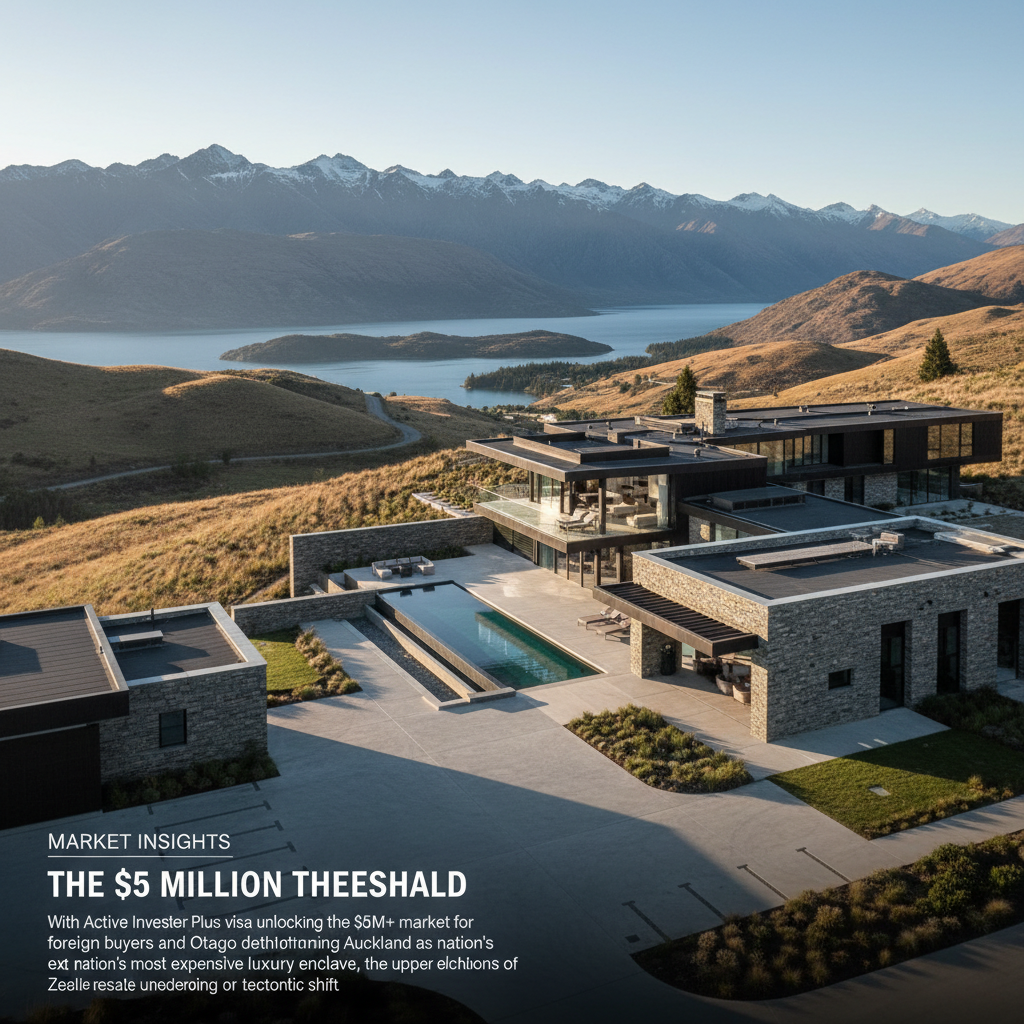
 Waiheke Island aerial — Auckland's most coveted escape" />
Discover the World
Recent market analytics reveal that Otago has overtaken Auckland as the nation's most expensive luxury market. While Auckland's premium sector has hovered at an average of $2.5 million—experiencing a mild contraction over the past twelve months—Otago has accelerated. Driven by the Queenstown-Lakes district, Otago's luxury benchmark has climbed from $2.3 million in 2024 to a formidable $2.7 million today.
This decoupling of Auckland and Queenstown highlights a profound shift in buyer priorities. The modern ultra-wealthy purchaser places a premium on highly specific attributes.
- Unconstrained Lifestyle: Immediate proximity to world-class alpine resorts, vineyards, and private aviation facilities.
- Architectural Scarcity: Tightly held lakeside enclaves where geographic constraints strictly limit new supply.
- Geopolitical Distance: The ultimate luxury in 2026 is physical and political distance from global volatility.
03The Auckland Proposition
Does this mean Auckland is losing its luster? Not quite. The city remains the commercial beating heart of the nation. Prestigious suburbs like Remuera, Herne Bay, and Parnell continue to offer the infrastructure, educational institutions, and connectivity that inbound expat families require.
However, the Auckland prestige market is currently operating as a buyer's domain. Stabilized pricing and elevated inventory levels present a distinct window of opportunity for high-net-worth individuals. Serious domestic buyers can acquire trophy assets at rational valuations, right before the full weight of the AIP visa capital trickles down through the domestic economy.
04Strategic Implications for 2026
As we navigate the second half of the year, the New Zealand luxury property market is operating on two distinct tracks. The broader housing market remains cautious, dictated by regional variances, interest rate plateaus, and domestic affordability constraints. But the $5 million-plus sector is playing by an entirely different set of macroeconomic rules.
For investors and premium agents, the mandate is clear: understand the nuance of the international buyer. The influx of AIP capital is not speculative; it is highly considered, lifestyle-driven, and demanding of perfection. Properties that offer turnkey exceptionalism, verifiable privacy, and architectural pedigree will command premiums that defy domestic market averages.
New Zealand is no longer just a beautiful destination at the bottom of the world. In the eyes of global capital, it has solidified its status as the ultimate blue-chip asset.
Discover more exceptional New Zealand residences and market insights at NZ Luxury Homes — nzluxuryhomes.nz.