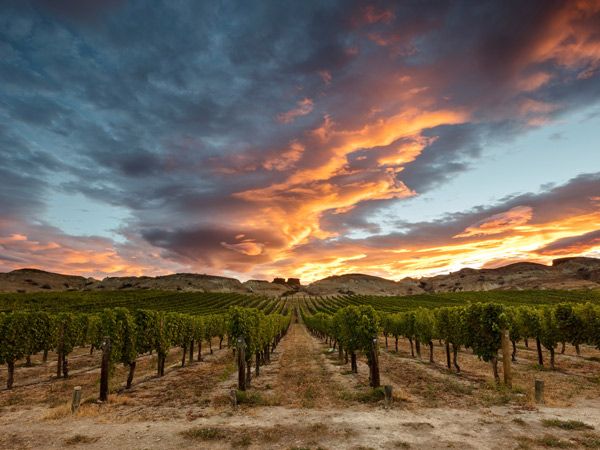
The answer, when you contact Felton Road about visiting, is polite and final. There is no walk-in cellar door. There is no public tasting room. Access is by prior arrangement, primarily for wine club members, trade, and invited guests. Production is deliberately capped at 400 barrels — approximately 150,000 bottles — a ceiling that has not moved since 2006, despite demand from every continent that takes fine wine seriously. When a bottle of Block 5 Pinot Noir appears on a restaurant wine list, it typically sells within days.
- Felton Road maintains a strict production ceiling of 400 barrels annually, prioritizing exceptional quality and site expression over industrial growth.
- The winery has earned New Zealand Winery of the Year for two consecutive years, 2024 and 2025, due to consistent excellence across its biodynamic portfolio.
- Access is restricted to wine club members, trade, and invited guests, as there is no public cellar door or walk-in tasting room available.
- The estate farms 34 hectares across four distinct Bannockburn sites, each contributing unique character to their highly sought-after Pinot Noir, Chardonnay, and Riesling wines.
This is the context for understanding Felton Road. It is not exclusive in the manner of a luxury hotel managing scarcity as a commercial strategy. It is exclusive because there is genuinely not enough of it, and because the people who make it — owner Nigel Greening, winemaker Blair Walter, and viticulturist Gareth King — have made a deliberate and permanent choice to prioritise quality over scale. The Real Review named Felton Road Winery of the Year New Zealand in both 2024 and 2025, the first producer to win in consecutive years. Decanter describes its single-block Pinot Noirs as operating at Burgundy Premier Cru and Grand Cru tier parity. The international fine wine community has reached a consensus that is unusual in its unanimity: Felton Road is, simply, the finest wine producer in New Zealand.
01The Origin: A Retired Ophthalmologist, a Slope in Bannockburn, and a Hogshead of 1995
The Felton Road story begins with Stewart Elms — a retired ophthalmologist and blackcurrant farmer from Dunedin who enrolled in the viticulture and wine science course at Lincoln University as its oldest student by approximately twenty years. His goal, upon graduation, was straightforward: make great Pinot Noir. After extensive soil and climate research, he found what he was looking for on a perfectly exposed north-facing slope just off the Felton Road in Bannockburn — a name that would become, within a decade, the most important single address in New Zealand wine.
Elms planted Blocks 1, 2, and 3 in 1992. By doing so, he approximately doubled Central Otago's vine hectarage at the time — the region covered just 19 hectares in 1990. The first wine, a single hogshead, was made in 1995 by Grant Taylor (now of Valli Wines) at Gibbston Valley. Of the 300 bottles shipped to the United Kingdom, a handful remain — and those who have them are not selling.
In 2000, Nigel Greening — then an executive in the music industry — purchased the estate from Elms. Greening had already identified Cornish Point, an apricot orchard located where the Clutha and Kawarau Rivers meet, as the ideal complementary vineyard. He bought it the same year he bought Felton Road, planted it in 2000, and added the Calvert and MacMuir vineyards over the following years. The elm tree on every Felton Road screwcap is the reference to Stewart Elms — the acknowledgement that the founding instinct was right, and that the estate's current owners know it.
02The Four Vineyards: Distinct Sites, Distinct Wines
Felton Road today farms 34 hectares across four Bannockburn vineyards, all certified biodynamic under Demeter since 2010 and organic under BioGro since 2020. The vineyards share the same broad environment — schist-based soils, continental climate, low rainfall, high elevation — but each produces wines of meaningfully distinct character. Understanding the four is the foundation of understanding why Felton Road's portfolio exists as it does.
Elms Vineyard — the founding site, where Blocks 1, 2, and 3 sit on north-facing slopes at the end of Felton Road. Block 3 Pinot Noir, from some of the oldest vines on the property, is described by The Real Review as showcasing that balance of elegance and power which has become a hallmark of the winery. The 2023 Block 3 was reviewed blind alongside just under 100 other Central Otago Pinot Noirs and Chardonnays and shone for concentration and power underneath, with no doubt the wines will age gracefully into complex, beguiling old bottles. Block 5 Pinot Noir, from a different section of the Elms site, is darker-fruited and more structured — the wine that most frequently generates waiting lists.
Cornish Point Vineyard — where the Clutha and Kawarau Rivers converge, producing wines that Decanter describes as having a site surrounded on one side by the rushing Clutha River and on the other by the turquoise Kawarau River. The Cornish Point Pinot Noir has a different character from the Elms blocks — more mineral, more immediately expressive — reflecting the specific influence of two rivers and the particular stony soils of the apricot orchard site.
Calvert Vineyard — the most recently acquired of the four, producing wines described by Decanter as harmonious, so generous and giving that you nearly overlook the firm spine of acidity and tannin that shows its pedigree. The Calvert Pinot Noir is extremely limited in production.
MacMuir Vineyard — the fourth site, contributing to both the estate Bannockburn Pinot Noir and a single-vineyard expression. Walking every row of all four vineyards covers approximately 145 kilometres — a detail cited by viticulturist Annabel Bulk as the measure of the team's direct relationship with the vines. Central Otago wine region guide
03The Wines: Pinot Noir, Chardonnay, and Riesling from 400 Barrels
Felton Road produces three varieties across its four vineyards — Pinot Noir, Chardonnay, and Riesling — in a portfolio structured around the distinction between estate-level wines and single-vineyard or single-block expressions.
The Bannockburn Pinot Noir is the estate-level blend, drawing from all four vineyards, and represents the entry point to the Felton Road range. Its 2024 vintage was reviewed by Cameron Douglas MS with a note of purity of fruit, bouquet of freshness, power and varietal prowess — dark cherry, savoury dried herbs, hat and sandy clay soil complexities — with best drinking from late 2026 through 2035. This is the entry point. The single-block and single-vineyard expressions are more concentrated, more structured, and in some cases available only to Wine Club members.
Block 3 and Block 5 Pinot Noir are the wines most cited in international critical assessments. Block 3 offers rose petals, black cherries, graphite, and spice from some of Felton Road's oldest vines — powerful, elegant, and complex, with remarkable staying power described by reviewers as undoubtedly standing the test of time. Block 5 is darker-fruited and more structured, described as a layered, powerful Pinot with serious structure. Both are extremely limited. Both require either Wine Club membership or a relationship with the winery to access at release.

Image: International Traveller — Tasting wines in the Bannockburn sub-region of Central Otago, where Felton Road's four vineyards are situated
Chardonnay from Felton Road is increasingly regarded as equal to the Pinot Noir in critical standing. Block 2 Chardonnay and Block 6 Chardonnay are single-block expressions from specific sections of the Elms vineyard — both described by retailers as focused and finely textured, showing fruit purity and mineral drive. The Block 6 is produced from what is described as one of Bannockburn's best slopes. Both are unfined and increasingly unfiltered, following the same philosophy as the Pinot Noir programme.
Riesling — dry from Block 2 and medium-sweet from Block 4 — completes the portfolio and is produced in volumes small enough to make it genuinely rare outside New Zealand. The dry Riesling is citrus-driven and finely textured; the sweet expression is balanced and precise. Both are extremely limited.
All wines are produced using indigenous yeasts, minimal sulphur, and natural malolactic fermentation. The winery uses a gravity-fed system to handle grapes with minimal intervention. Nothing is fined; increasingly nothing is filtered. The goal, in every decision from vineyard to bottle, is the preservation of what the four sites actually produce rather than the imposition of a style upon them.
04Biodynamics: A Fancy Way of Using the Ecosystem
Nigel Greening's description of biodynamic farming to Decanter is the most direct framing of the Felton Road philosophy. We're biodynamic, which is a fancy way of saying we use the ecosystem, such as falcons chasing birds from the vines. What is described in certification documents as Demeter biodynamics — preparations, planetary calendars, homeopathic treatments of the soil — is, in practice, a commitment to the vineyard as a self-sustaining system rather than a managed industrial output.
Organic farming began at Felton Road in 2002. Biodynamic practices followed in 2003. Full Demeter certification across all four vineyards came in 2010, making Felton Road among the earliest fully biodynamic estates in New Zealand. BioGro organic certification was added in 2020. The consequences — a soil microbiome of extraordinary health, vine stress managed through ecology rather than intervention, fruit of uncommon concentration and specificity — are present in every glass.
Viticulturist Gareth King and his team walk the 145 kilometres of vineyard rows in service of wines whose critical standing now places them in conversation with the finest domaines in Burgundy. That conversation is not metaphorical. Decanter's tasting notes for Felton Road's single-block Pinot Noirs cite Premier Cru and Grand Cru tier parity directly. Winery of the Year New Zealand in 2024 and 2025, consecutively, is not coincidental.
05How to Access Felton Road Wines
Direct visit is not the primary access model. Felton Road's wines reach most buyers through four channels.
Wine Club membership is the most reliable route to the single-block and single-vineyard expressions at release. The club operates through the winery directly. Membership gives priority allocation of Block 3, Block 5, and the vineyard-designate Pinot Noirs before they are offered elsewhere. Enquiries through the Felton Road website.
Restaurant wine lists across Central Otago, Queenstown, and Auckland's finest restaurants carry Felton Road. The Bannockburn Pinot Noir and Cornish Point appear most frequently; Block 3 and Block 5 are rarer on lists and typically sell quickly when listed.
Specialist wine retailers in New Zealand and internationally carry allocated quantities of the estate wines. In New Zealand: Glengarry, the Fine Wine Delivery Company, and Caro's Wine in Auckland. Internationally: specialist importers in the United Kingdom, United States, Australia, and across Asia.
Trade and media visits are arranged through the winery directly. Felton Road does not operate public tours or walk-in tastings, but serious buyers, collectors, and trade visitors can arrange access through the winery's contact channels.
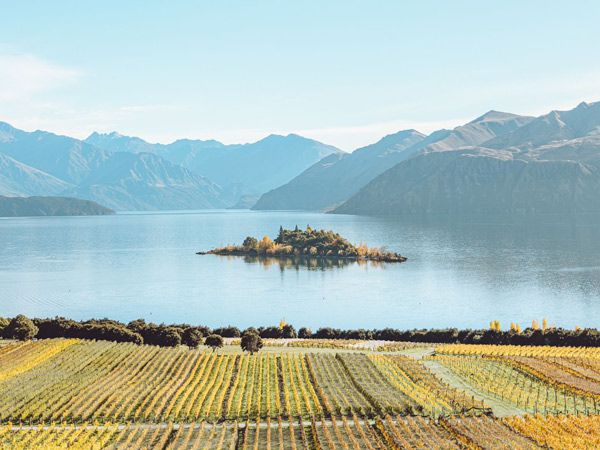
Image: International Traveller — The Central Otago landscape of which Felton Road's Bannockburn is the most internationally recognised sub-region
06Why Felton Road Matters to the NZ Luxury Homes Audience
Felton Road is the clearest single example in New Zealand wine of what happens when extraordinary land is farmed without compromise and managed without commercial pressure for scale. The production cap at 400 barrels is the decision that defines everything else — it means the wines are always in demand, always improving as vine age increases, and never diluted by the need to fill more orders than the four vineyards can honestly produce.
For buyers exploring the Bannockburn and broader Central Otago residential and lifestyle property market, Felton Road represents the region's finest expression — in wine terms — of what committed land stewardship over time produces. The Bannockburn sub-region received New Zealand's first separate Geographical Indication in 2022, reflecting the international recognition of its specific terroir. The Felton Road vineyards are at the centre of that terroir. A glass of Block 3 is the most efficient possible introduction to what makes this corner of the South Island different from every other place in New Zealand. Queenstown and Wanaka luxury property market Rippon Vineyard Wanaka
07The Cap at 400 Barrels
Every decision at Felton Road flows from the same commitment: the cap at 400 barrels. It is the decision that keeps the wines rare, the farming intensive, the team small enough to walk 145 kilometres of vineyard rows, and the critical consensus unanimous in a way that no winery producing at industrial scale can achieve. It is also the decision most likely to prevent you from getting a bottle of Block 5 without joining the Wine Club.
That is precisely the point. Felton Road does not produce wine for the general market. It produces wine for people who want the most specific, most considered, most deeply site-expressed expression of what Central Otago's Bannockburn can produce. For forty barrels a year across four vineyards, that is what it produces.
For those exploring residential and lifestyle property in Central Otago and the Queenstown-Lakes district, nzluxuryhomes.nz provides private access to the most considered holdings in this market.
Contact Felton Road: info@feltonroad.com or +64 3 445 0885. Wine Club enquiries through feltonroad.com.