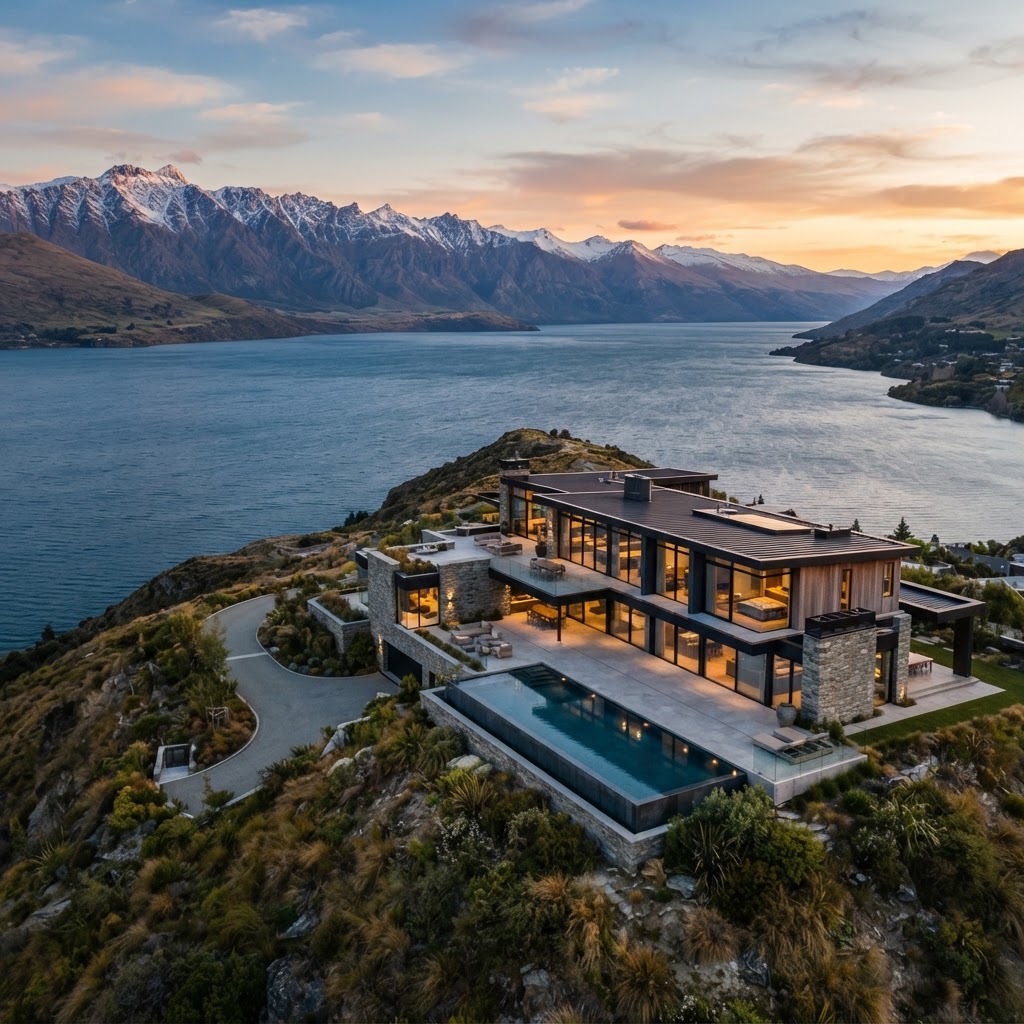
01The Great Repositioning
In the high-stakes chess game of global real estate, New Zealand has long been the ultimate safe-haven asset. Yet, as we cross the midway point of 2026, the profile of the capital flowing into Aotearoa is shifting decisively.
- American buyers can purchase New Zealand luxury property, but most transactions require Overseas Investment Act consent from LINZ.
- A strong US dollar creates a generational arbitrage opportunity, with NZ$5M estates costing roughly US$3M—far below comparable US properties.
- The Active Investor Plus visa offers a direct residency pathway for Americans investing NZ$5M or more in qualifying New Zealand assets.
- New Zealand has no general capital gains tax, no stamp duty, and no land tax on most primary residences—a significant advantage for US buyers.
- Queenstown, Waiheke Island, and Auckland's prestige suburbs are the primary focal points for American luxury property investment.
- The $3M+ ultra-prime sector is decoupling from New Zealand's broader housing market, driven by cash buyers seeking privacy and turnkey perfection.
A recent analysis by Fortune highlighted a fascinating paradox: while New Zealand's broader residential market has spent the last year searching for a cyclical floor, the ultra-prime sector—defined strictly by the $3 million-plus threshold—is experiencing a profound, insulated renaissance. The catalyst? A wave of highly capitalized American buyers.
02Can Americans Buy Property in New Zealand?
Yes—but with important caveats that every US buyer must understand before entering the market. The Overseas Investment Act 2005 (OIA) governs foreign ownership of New Zealand land. For most American buyers, any purchase of "sensitive land"—which includes residential land on certain islands, non-urban land exceeding 5 hectares, or land adjoining lakes, conservation areas, or the coast—requires consent from Land Information New Zealand (LINZ).
Crucially, the OIA applies a "benefit to New Zealand" test for luxury residential properties. Overseas buyers must typically demonstrate that the investment will benefit New Zealand—often through a commitment to develop the land, live in the property, or make a meaningful economic contribution. Consent is not automatic, and the process typically takes 30–60 working days. However, New Zealand citizens and residents are exempt, and for those willing to invest at scale, the Active Investor Plus visa offers a structured route to residency and unrestricted property ownership.
03The Active Investor Plus Visa: A Pathway for American Investors
For Americans prepared to deploy NZ$5 million or more, the Active Investor Plus (AIP) visa provides a direct pathway to New Zealand residency. The visa requires a minimum NZ$5 million investment in acceptable New Zealand investments over a three-year period, with a minimum 117-day residency requirement during that time.
For luxury property buyers, the AIP visa is particularly attractive because properties valued at NZ$5 million or above can qualify as growth investments under the visa framework—especially when the property involves development, renovation, or is structured as a development project. This makes the AIP visa a powerful tool for Americans seeking both a luxury residence and a clear path to New Zealand residency.
04The Currency of Distance
For the American ultra-high-net-worth individual (UHNWI), the appeal of New Zealand is no longer merely qualitative. It is deeply quantitative.
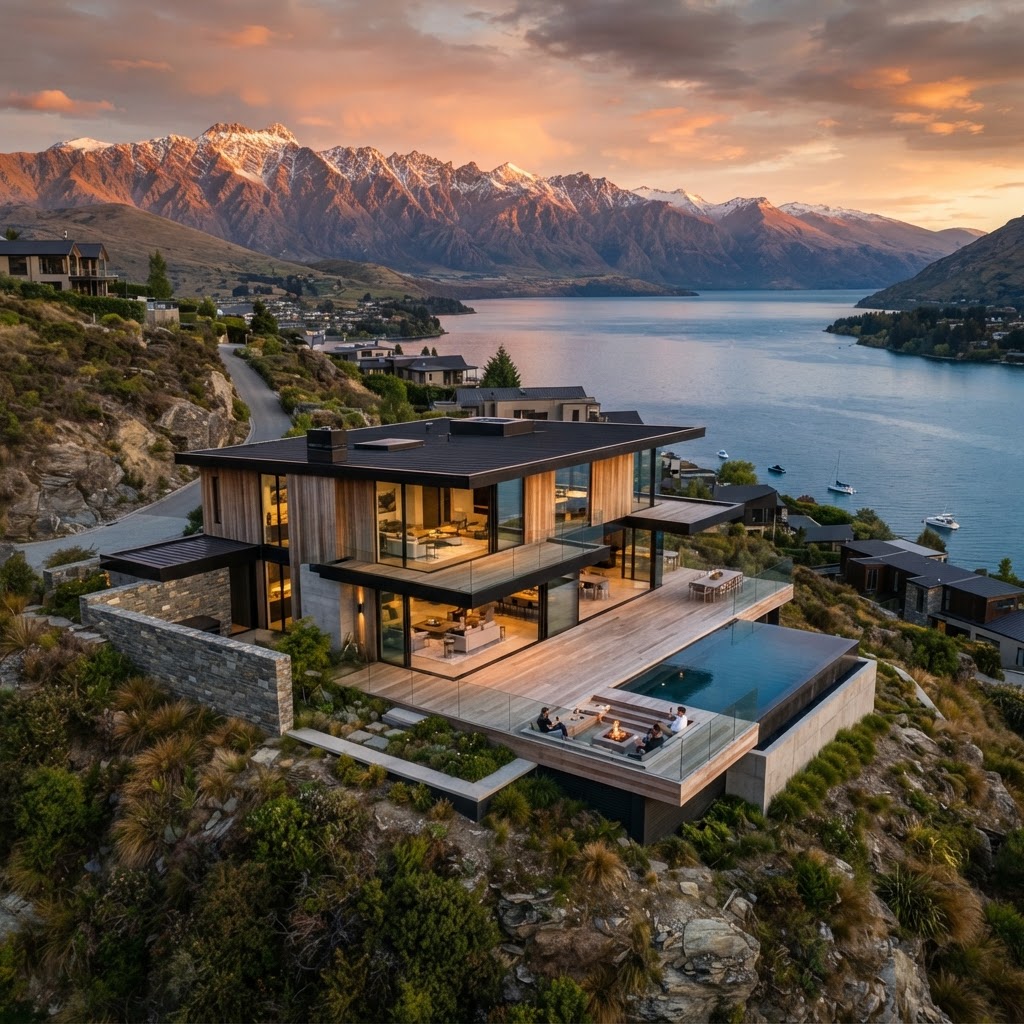
The strength of the US dollar against the Kiwi, combined with a recalibrated pricing landscape in the domestic market, has created a generational entry point. For those wielding US capital, New Zealand's prestige property sector effectively sits at a double discount. It is an arbitrage opportunity rarely seen in Tier 1 global lifestyle destinations.
To put this in perspective: a NZ$5 million estate in Queenstown might cost approximately US$3 million at current exchange rates. A comparable property in Aspen, Jackson Hole, or Lake Tahoe would command $15–25 million. The comparative value is extraordinary—and American buyers with access to USD are uniquely positioned to exploit it.
05The $3M+ Bifurcation
We are witnessing a definitive bifurcation in New Zealand real estate. The median market remains constrained by domestic interest rates and tightening local liquidity. The luxury tier, conversely, operates in a completely different financial ecosystem—one driven by cash, equity, and international wealth preservation strategies.
For high-net-worth investors, the $3 million mark is no longer the ceiling; it is the baseline entry ticket for properties offering the requisite trifecta: architectural pedigree, absolute privacy, and turnkey perfection.
American buyers are distinctly intolerant of deferred maintenance. They are not looking for projects. They demand immediate, frictionless transitions. Estates that offer smart-home integration, sustainable off-grid capabilities without compromising luxury, and proximity to private aviation infrastructure are commanding intense premiums.
06The Demand for Architectural Provenance
Beyond geography and yield, the American buyer is fundamentally reshaping the aesthetic expectations of the New Zealand market. There is a palpable shift toward properties with distinct architectural provenance. The influence of mid-century modernism, fused with Pacific vernacular—think extensive use of local timber, rammed earth, and seamless indoor-outdoor thresholds—is highly coveted.
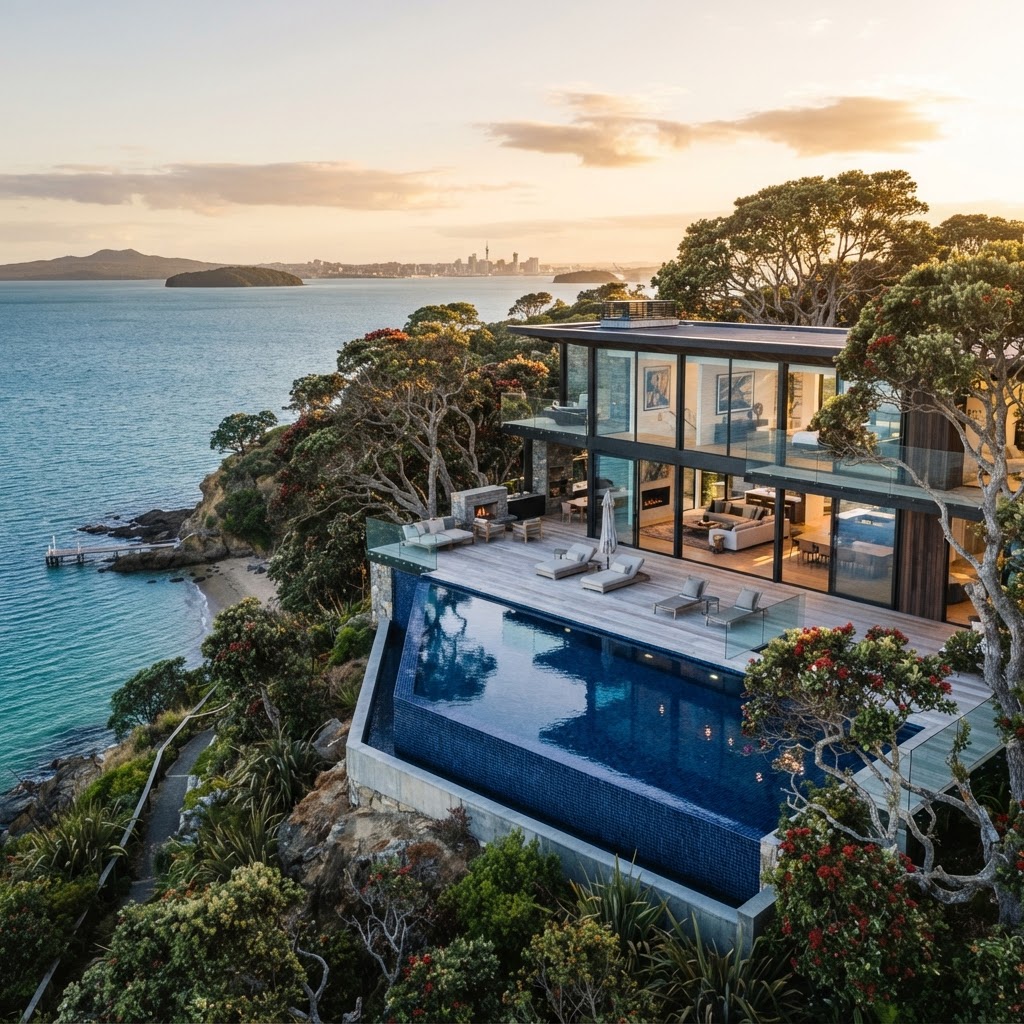
We are seeing a premium applied to homes designed by globally recognized New Zealand architects. For the international buyer, the home itself must be a sculptural response to the landscape. This demand is pushing local developers and luxury spec builders to elevate their finishes, knowing that their ultimate end-user will be comparing the property against estates in Malibu, Carmel, or Lake Tahoe.
07Geographic Focal Points: Where American Capital Is Landing
The geography of American demand is sharply defined, with three primary concentrations:
- Queenstown and Wanaka (The Southern Lakes): The undisputed epicenters of US interest. The promise of alpine seclusion, paired with world-class golf and viticulture, directly competes with Aspen and Jackson Hole—at a fraction of the comparative price per square meter. Queenstown's luxury median sits around NZ$3.5–5 million, with trophy estates exceeding NZ$15 million.
- Waiheke Island (The Hauraki Gulf): The Hamptons of the South Pacific, drawing Wall Street and Silicon Valley expatriates seeking coastal anonymity. A 35-minute ferry from Auckland, Waiheke offers beachfront estates, olive groves, and vineyard properties from NZ$3–10 million.
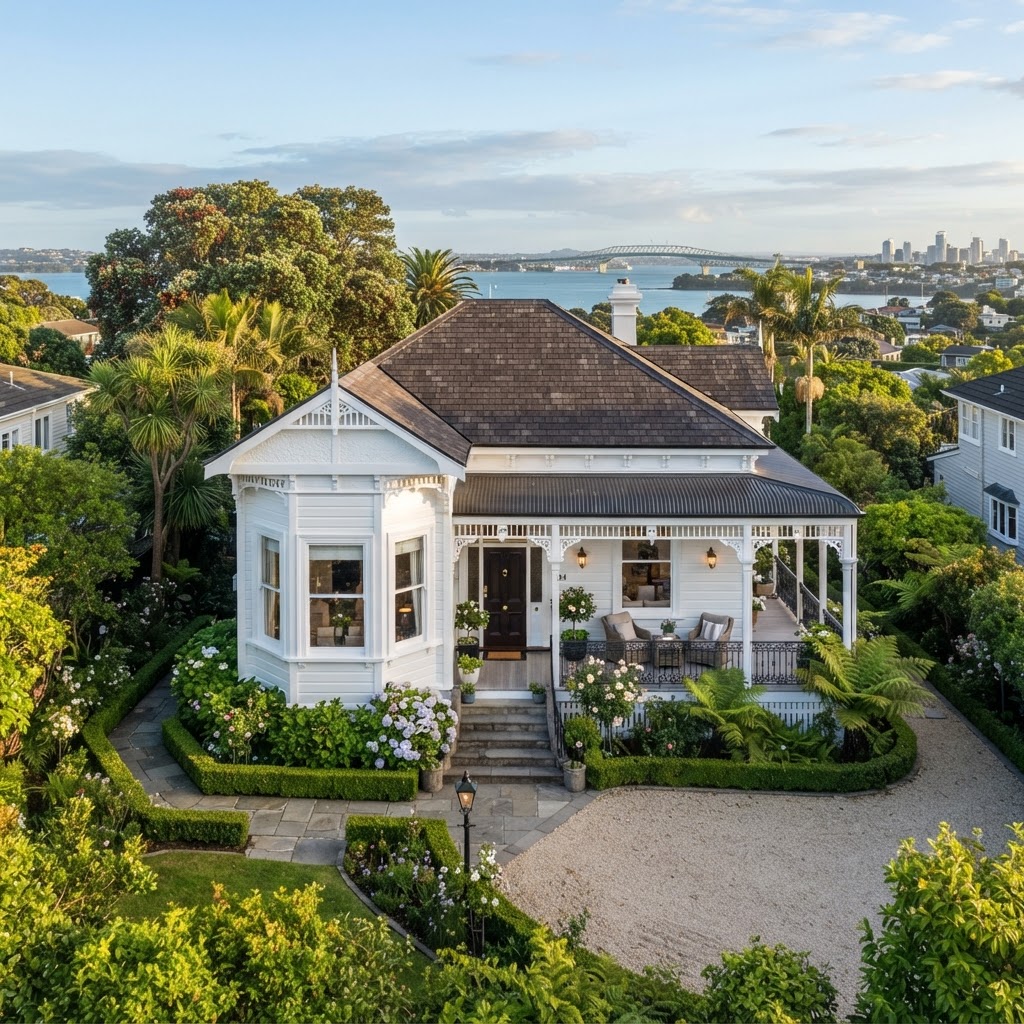
- Prime Auckland (Remuera, Herne Bay, Parnell): Heritage estates and penthouses commanding steady international inquiries from American executives establishing localized APAC bases. Auckland's prestige suburbs see luxury transactions in the NZ$4–12 million range.
08Tax Implications for American Buyers
One of New Zealand's most compelling attractions for American investors is its tax environment. New Zealand has no general capital gains tax on investment property, no land tax on the primary residence (in most cases), and no stamp duty. For US buyers accustomed to state-level property taxes and capital gains levies, this represents a significant advantage.
However, American citizens remain subject to US tax obligations regardless of where they live. The US-NZ Double Taxation Agreement prevents most double taxation, but Americans must still file IRS returns and navigate FATCA reporting requirements. The Foreign Earned Income Exclusion (FEIE) and the Foreign Tax Credit (FTC) can significantly reduce US tax liability for Americans who establish New Zealand residency.
For high-net-worth buyers, structuring the purchase through a New Zealand trust or family office can provide both tax efficiency and estate planning benefits. Specialist tax advice from both US and New Zealand professionals is essential before any purchase.
09The Purchase Process: A Step-by-Step Guide for Americans
For American buyers, the path to owning a New Zealand luxury property follows a structured process:
- 1. Engage a New Zealand lawyer: All property purchases require legal representation. A lawyer will handle due diligence, title search (Landonline), and OIA consent if required.
- 2. Determine OIA consent requirements: Your lawyer will assess whether the property requires overseas investment consent and, if so, prepare the application to LINZ.
- 3. Structure the purchase: Decide whether to buy as an individual, through a New Zealand trust, or via a corporate entity. Each structure has different tax and OIA implications.
- 4. Make an offer: New Zealand uses conditional contracts. Common conditions include building inspection, finance approval, and OIA consent. The offer process is typically less adversarial than in the US.
- 5. Settlement: Once conditions are satisfied, settlement typically occurs 20–30 days later. Your lawyer will register the transfer with Land Information New Zealand.
10Navigating the Regulatory Moat
For premium real estate agents and domestic sellers, this influx presents both a lucrative opportunity and a complex logistical challenge.
The Overseas Investment Act remains a formidable moat. However, rather than a barrier, sophisticated American buyers and their advisors are treating it as a filter—one that, once navigated, actually enhances the exclusivity and value of the asset. The process demands patience, expert legal counsel, and the discretion demanded by family offices. The most significant transactions of 2026 have occurred entirely off-market, brokered through whispered networks rather than public listings.
11The Long View
As we look toward the remainder of 2026, the narrative is clear. New Zealand's luxury property market is decoupling from domestic economic gravity.
For serious luxury buyers, the window to secure generational assets before international competition fully normalizes prices upward is narrowing. For high-net-worth investors, the macro fundamentals of New Zealand—geopolitical stability, climate resilience, and rule of law—make holding prime dirt here an essential portfolio hedge.
The American ascendancy in the $3M+ sector is not a fleeting trend. It is a structural realignment of who owns the pinnacle of New Zealand. Those positioned to understand, broker, and invest alongside this capital wave will define the next decade of luxury real estate in Aotearoa.