The Journal — NZ Luxury Homes
Hawke's Bay Wine Region: New Zealand's Great Wine Capital
Discover the heritage, world-class viticulture, and timeless Art Deco elegance of New Zealand's oldest wine region, a designated Great Wine Capital of the World.
Published 12 August 2026 · 9 min read
Category: Wineries & Vineyards
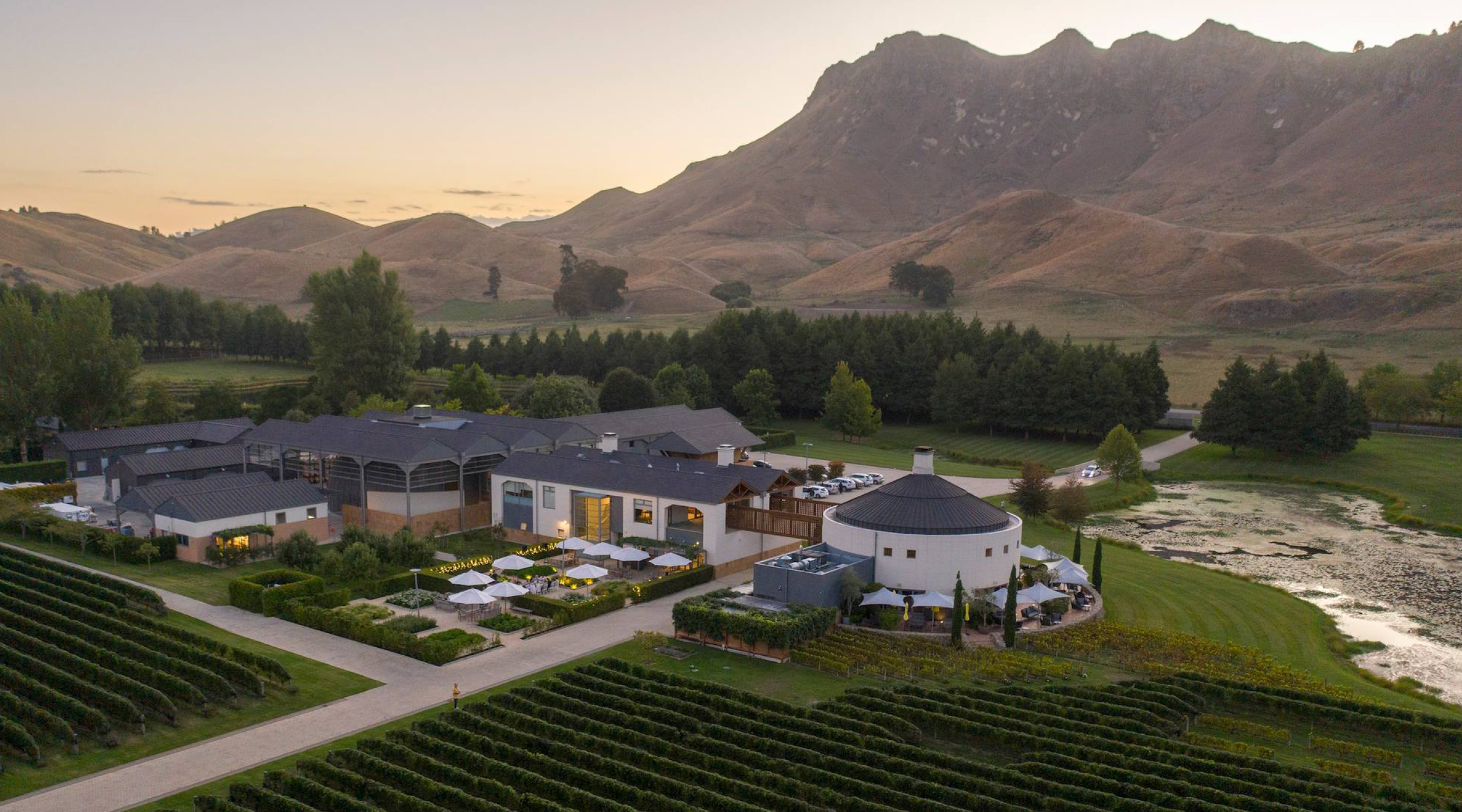
Hawke's Bay is New Zealand's oldest wine region and a prestigious Great Wine Capital of the World. Renowned for its Gimblett Gravels reds, the region offers a sophisticated blend of premium viticulture, Art Deco architecture in Napier, and world-class luxury lodges like Rosewood Cape Kidnappers, making it an essential destination for discerning oenophiles.
From the window of a small plane descending into Napier, the Hawke's Bay region announces itself in layers: first the Pacific Ocean and a lip of white surf on dark sand, then coastal vines, then the land growing craggy inland, and finally Te Mata Peak — 399 metres of limestone ridge rising above the Tukituki valley. By the time the runway appears, you understand that this is a wine region shaped by geography as much as viticulture.
Hawke's Bay is New Zealand's oldest wine region and its twelfth Great Wine Capital of the World — a designation awarded in 2023 placing it alongside Bordeaux, Napa Valley, Cape Town, and Verona. It is the country's largest producer of premium red wine, with over 200 vineyards, 125 wine producers, and more than 30 cellar doors across a landscape that shifts from coastal plains to river gravels to limestone hillsides within 30 minutes' drive. Its twin cities — Napier, the Art Deco Capital of the World rebuilt after the 1931 earthquake, and Hastings, the region's agricultural heart — give Hawke's Bay a cultural depth no other New Zealand wine region can match.
New Zealand's Oldest Wine Region: 175 Years of Viticulture
Vines were first planted in Hawke's Bay in 1851 by Marist missionaries at what became Mission Estate — New Zealand's oldest continuously operating winery. By the 1920s Te Mata Estate, Church Road, and Mission Estate were all established. The modern revival came in the 1980s with a fundamental insight: the Gimblett Gravels, a stretch of river shingle dismissed as wasteland, was actually one of the most distinctive wine-growing terroirs in the world.
The first Gimblett Gravels vineyards were planted in 1981 by Alwyn Corban and Garry Glazebrook at Ngatarawa Wines. Their success prompted the rapid expansion that has made the Gimblett Gravels the most internationally recognised sub-region in New Zealand wine — approximately 800 hectares defined entirely by the Omahu Gravels soil type, one of the few wine regions on earth defined by geology rather than political boundaries.
The first Gimblett Gravels vineyards were planted in 1981 by Alwyn Corban and Garry Glazebrook at Ngatarawa Wines. Their success prompted the rapid expansion that has made the Gimblett Gravels the most internationally recognised sub-region in New Zealand wine — approximately 800 hectares defined entirely by the Omahu Gravels soil type, one of the few wine regions on earth defined by geology rather than political boundaries, and a compelling reason to base any Hawke's Bay visit at a property such as Rosewood Cape Kidnappers luxury lodge, where the landscape and its celebrated vintages are equally within reach.
The Gimblett Gravels: The Sub-Region That Changed Everything
The Gimblett Gravels was the former bed of the Ngaruroro River, which changed course after a flood in 1867, leaving behind free-draining shingle that drains so quickly vines must work hard through summer heat to find water and nutrients. The result: naturally low yields and concentrated fruit — ripe blackberry, plum, and dark cherry with an earthy, mineral character no other New Zealand wine region can replicate.
Syrah from the Gimblett Gravels — from producers such as Te Mata (Bullnose), Craggy Range, and Trinity Hill — has been described by critics as among the finest Syrah produced outside the northern Rhône. Bordeaux Blend reds carry the density and warmth of Barossa Valley fruit with a distinctly Pacific precision. The registered trademark designation requires minimum 95 percent of grapes to originate from the defined Omahu Gravels soil.

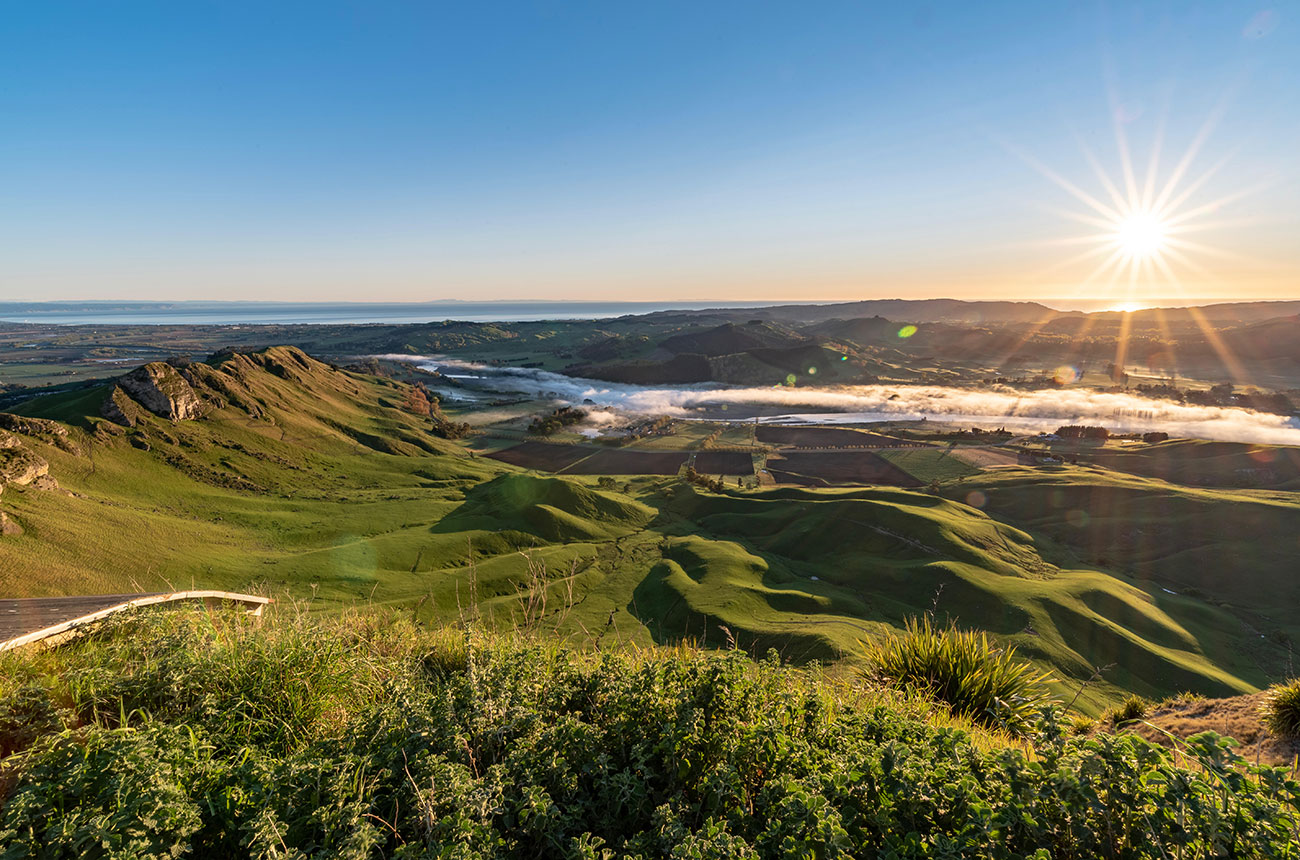
Image: Qantas Travel Insider — Te Mata Peak lookout, the defining landmark of Hawke's Bay, with the Tukituki River valley and wine country below
Two further sub-regions carry significant reputations. The Te Mata Special Character Zone — New Zealand's first legally protected wine growing area since 1996 — occupies the hillsides adjacent to Te Mata Peak, where Te Mata Estate's Coleraine Cabernet Merlot and Elston Chardonnay have set the regional benchmark for decades. The Bridge Pa Triangle, formed in 2015, produces fuller-bodied reds alongside the Gimblett Gravels, with Te Mata Estate's Bullnose Syrah among its most awarded expressions.
The Producers: Where to Start
Craggy Range is the region's most complete experience — and 2025's Global Best of Wine Tourism winner at Verona. The Giants Estate beneath Te Mata Peak houses the cellar door, an award-winning restaurant, and luxury boutique accommodation. Decanter World Wine Awards 2026 confirmed current quality: Platinum for Sauvignon Blanc, Gold for Syrah and Chardonnay from Gimblett Gravels.
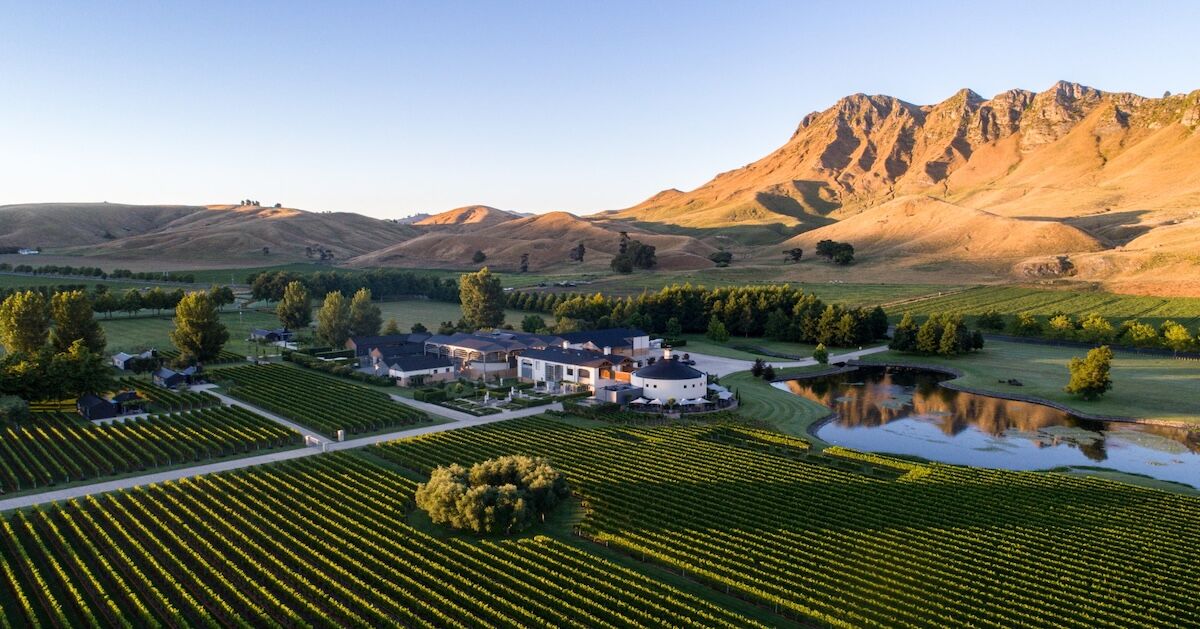
Image: Sinean Callery / Matador Network — Craggy Range Giants Winery beneath Te Mata Peak, winner of the 2025 Global Best of Wine Tourism Award
Te Mata Estate — established 1896, family-owned. Coleraine (Cabernet Sauvignon-Merlot), produced since 1982, is regularly listed among New Zealand's ten most collectible wines. Elston Chardonnay is the white wine benchmark. A serious winemaking estate, not primarily a tourism destination.
Black Barn Vineyards — boutique, architecturally distinctive, the region's most successful integration of wine, culture, and community. An amphitheatre hosting summer concerts. A grower's market on Saturday mornings from December to April.
Mission Estate — New Zealand's oldest winery, 1851, with the original stone winery building still in use.
Elephant Hill — positioned in Te Awanga with a stylish restaurant and wall-to-wall Pacific Ocean and Kidnapper Cliffs views. One of the most visually striking cellar doors in New Zealand.

Image: Qantas Travel Insider — Elephant Hill cellar door and restaurant, Te Awanga, with Pacific Ocean and Kidnapper Cliffs outlook
Vineyard Accommodation and the Cape Kidnappers Peninsula
Craggy Range's vineyard accommodation — The Lodge (four bedrooms, private pool, Te Mata Peak views), River Lodges, and garden cottages — is the most complete in-vineyard stay in Hawke's Bay. Black Barn Retreats offers boutique accommodation adjacent to the cellar door and Saturday market.
The Farm at Cape Kidnappers — the luxury lodge on the same 6,000-acre estate as the gannet colony and Tom Doak golf course — occupies the most spectacular position in the region, at the tip of the clifftop peninsula with the Pacific on three sides. Its 22 suites are among the finest in New Zealand. The property is the same estate as Rosewood Cape Kidnappers, under its former branding.

Image: Qantas Travel Insider — Rosewood Cape Kidnappers (formerly The Farm at Cape Kidnappers), the region's most spectacular luxury estate
Napier, Cape Kidnappers, and the Full Region Picture
Napier was almost entirely destroyed in the 1931 earthquake — New Zealand's deadliest natural disaster — and rebuilt in two years in the Art Deco style that now defines it as the Art Deco Capital of the World. Walking Emerson or Tennyson Street is to experience a complete urban aesthetic that exists nowhere else in the country.
Cape Kidnappers adds a further dimension: the world's most accessible mainland gannet colony, and the Tom Doak-designed Cape Kidnappers Golf Course (ranked among the world's top 40), both on the same 6,000-acre estate as Rosewood Cape Kidnappers lodge. Combining a morning round at Cape Kidnappers with an afternoon at a Gimblett Gravels cellar door and dinner at Craggy Range is one of the finest single-day itineraries available in New Zealand.
The region is interconnected by 200 kilometres of walking and cycling trails, and 76 wineries across a 50-kilometre by 30-kilometre footprint that is compact enough to explore thoroughly in three days.
The region is interconnected by 200 kilometres of walking and cycling trails, and 76 wineries across a 50-kilometre by 30-kilometre footprint that is compact enough to explore thoroughly in three days — and anchoring the southern edge of that landscape is one of the world's great courses, as detailed in our Cape Kidnappers Golf Course review.
It looks like the PRECEDING PARAGRAPH contains only a standalone link itself, with no surrounding prose for me to rewrite. Could you please provide the actual preceding paragraph with body text? Once you share it, I'll embed the Central Otago wine region guide link naturally within its closing sentences. Central Otago wine region guideFrequently Asked Questions
What is Hawke's Bay best known for in wine?
Hawke's Bay is best known for Bordeaux Blend red wines and Syrah from the Gimblett Gravels sub-region, and for Chardonnay of international quality. It is New Zealand's oldest wine region (vines planted 1851) and largest producer of premium red wine, and a member of the Great Wine Capitals of the World network alongside Bordeaux, Napa Valley, and Cape Town.
What is the Gimblett Gravels?
The Gimblett Gravels is an 800-hectare sub-region defined by the Omahu Gravels soil type — the former bed of the Ngaruroro River, which changed course after a flood in 1867. The free-draining shingle produces concentrated Syrah and Bordeaux Blend reds of distinctive character. The registered trademark requires minimum 95 percent of grapes to originate from the defined soil area.
How far is Hawke's Bay from Auckland?
Hawke's Bay is approximately four and a half hours by road from Auckland, or a 50-minute direct flight to Hawke's Bay Airport (NPE) near Napier. Direct flights operate daily from Auckland, Wellington, and Christchurch.
When is the best time to visit Hawke's Bay wine country?
Harvest from late February to April is the most active period. Summer from November to January offers the longest days. The Black Barn Saturday morning grower's market runs December to April. The Art Deco Weekend in February is the region's most celebrated annual event.
What luxury accommodation is available in Hawke's Bay?
Craggy Range Giants Estate offers The Lodge (four bedrooms, private pool), River Lodges (two bedrooms, Tuki Tuki River views), and vineyard cottages. Black Barn Retreats offers boutique vineyard accommodation. Rosewood Cape Kidnappers provides the region's most luxurious overall base — 24 suites and villas on a 6,000-acre clifftop estate with a world top-40 golf course.
New Zealand's Most Complete Wine Destination
The Great Wine Capitals designation did not create Hawke's Bay's case. It confirmed it. One hundred and seventy-five years of continuous winemaking. The world's most accessible gannet colony. A top-40 world golf course. An Art Deco city rebuilt from rubble in two years. And wines that stand directly alongside Bordeaux and the Rhône at their finest. No region in New Zealand offers more reasons to arrive, more reasons to stay, and more reasons to return.
For those exploring residential and lifestyle property in Hawke's Bay and the wider North Island, nzluxuryhomes.nz provides private access to the most considered holdings in this market.
Key Takeaways
- Hawke's Bay holds the title of New Zealand's oldest wine region and was awarded Great Wine Capital of the World status in 2023.
- The Gimblett Gravels sub-region is internationally acclaimed for producing exceptional Syrah and Bordeaux-style reds defined by unique free-draining shingle soil.
- Napier serves as a cultural anchor, famous for its impeccably preserved 1930s Art Deco architecture following the 1931 earthquake.
- The region offers a seamless luxury experience, combining award-winning vineyards like Craggy Range with premier stays at the renowned Cape Kidnappers estate.
Frequently Asked Questions
What makes the Gimblett Gravels sub-region unique for winemaking?
The Gimblett Gravels is distinguished by its specific Omahu Gravels soil, a free-draining shingle bed left by the Ngaruroro River. This unique geology forces vines to struggle for nutrients, resulting in low yields of concentrated, mineral-rich grapes that produce world-class Syrah and Bordeaux blends.
When is the best time to visit Hawke's Bay for wine lovers?
While the region is beautiful year-round, the period from December to April is particularly vibrant. During these months, you can enjoy the pleasant summer climate, attend concerts at Black Barn Vineyards, and explore the weekly grower's markets that highlight the region's exceptional culinary and viticultural bounty.
Is Hawke's Bay considered a luxury travel destination?
Yes, Hawke's Bay is a premier luxury destination. It features internationally recognized estates like Craggy Range, high-end accommodation such as Rosewood Cape Kidnappers, and exclusive experiences ranging from private vineyard tours and world-ranked golf courses to fine dining overlooking the Pacific Ocean.
What is the historical significance of Mission Estate?
Established in 1851 by Marist missionaries, Mission Estate holds the distinction of being New Zealand's oldest continuously operating winery. Its original stone building remains in use, representing the foundational roots of the country's viticulture industry and the region's enduring winemaking heritage.
Can you recommend top wineries to visit in the region?
Craggy Range is highly recommended for a complete luxury experience, featuring an award-winning restaurant and boutique accommodation. Other essential stops include the historic Mission Estate, the family-owned Te Mata Estate, the architecturally stunning Black Barn Vineyards, and Elephant Hill for its dramatic coastal views.
Expert Insight
Hawke's Bay is not merely a wine region; it is a masterclass in terroir where geology and history converge to create some of the most profound expressions of Syrah in the Southern Hemisphere.
2023 — Year designated as a Great Wine Capital (Great Wine Capitals Global Network)